


Table of Contents
- Essential Equestrian Gear for Beginner Riders
- Best Riding Helmet for Beginners
- How to Choose Horse Riding Boots
- What to Wear for Horseback Riding Lessons
- Beginner Horse Riding Gear Checklist
- Caring for Your Riding Gear
- Getting Started: Your First Ride
- Frequently Asked Questions
Last Updated: October 16, 2026
Essential Equestrian Gear for Beginner Riders
Starting your equestrian journey means investing in the right equipment. At Air Capital Tack, we've spent over 42 years helping new riders find gear that keeps them safe, comfortable, and confident in the saddle. Whether you're taking your first lesson or preparing to ride regularly, understanding equestrian gear for beginner riders is essential. The good news: you don't need to spend a fortune to get quality equipment that will last.
Most beginners feel overwhelmed by the sheer number of options available. You'll see endless product names, sizing systems, and recommendations that seem contradictory. Here's what actually matters: prioritize safety first, then fit, then comfort. Everything else is refinement. The foundation of any beginner's gear collection starts with three non-negotiable items: a helmet, boots, and riding clothes that allow freedom of movement.
The right gear does more than protect you. It builds confidence. When your helmet fits properly and your boots support your feet correctly, you can focus on learning rather than adjusting uncomfortable equipment. This guide walks you through every category of equestrian gear for beginner riders, what each piece does, and how to choose wisely.
Best Riding Helmet for Beginners
Your helmet is the most critical piece of safety equipment you'll own. A proper riding helmet protects your head in a fall, which is why choosing the right one matters far more than any other gear decision.
The best riding helmet for beginners offers three things: proper fit, adequate ventilation, and ASTM/SEI certification. That certification means the helmet has been tested and meets safety standards set by the American Society for Testing and Materials.
The Troxel Spirit Helmet is our top recommendation for beginner riders. It's the best-selling helmet at Air Capital Tack for good reason.

What sets this helmet apart is the FlexVisor, which won't shatter into sharp pieces if you fall. That feature alone reduces injury risk significantly.
If you're buying for a younger rider, the Troxel Youngster Helmet is designed specifically for children. It offers the same safety features in a lighter weight, with fun graphics that make kids excited to wear protection.

When trying on any helmet, it should sit level on your head, not tilted forward or back. You should be able to fit one finger between the helmet and your forehead. Too loose and it won't protect you in a fall.
How to Choose Horse Riding Boots
Riding boots serve a specific purpose: they protect your lower leg, provide ankle support, and create a clean line from knee to foot. They're not fashion, they're functional.
When choosing horse riding boots, look for these features: a one-inch heel to prevent your foot from sliding through the stirrup, smooth leather or synthetic material that won't bunch up inside your shoe, and ankle support that keeps your foot stable. The boot should fit snugly around your calf without cutting off circulation.
Most beginners start with half chaps and regular shoes rather than full riding boots. Half chaps are easier to fit, more affordable, and work well for lessons. The BaseQ Children's Synthetic Leather Half Chaps are excellent for young riders learning the basics.

Synthetic leather is a smart choice for beginners because it's durable and easy to clean. Real leather requires regular conditioning and care, something you can learn later once you're more invested in the sport.
When fitting boots or chaps, they should cover from just below your knee to your ankle. They shouldn't gap or bunch. If you're between sizes, size up rather than down. Tight chaps restrict movement and create discomfort that makes learning harder.
What to Wear for Horseback Riding Lessons
Your riding clothes need to allow movement while staying in place. You're not dressing for fashion, you're dressing for function and safety.
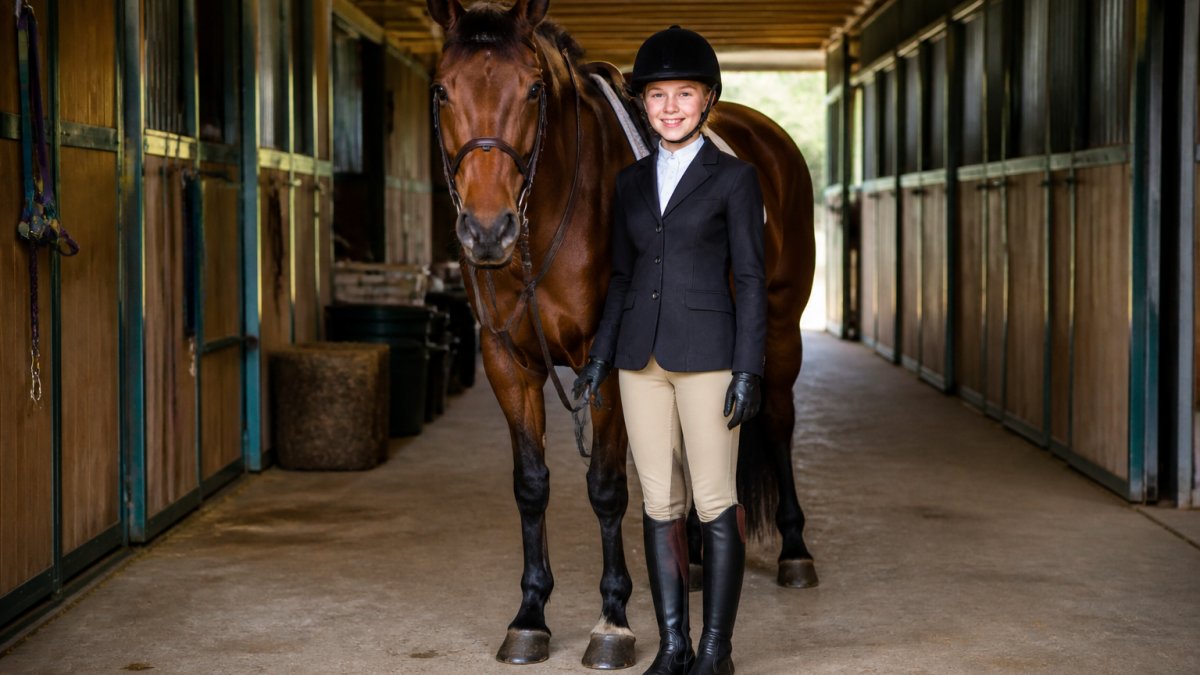
Start with long pants. Jeans work in a pinch, but riding-specific breeches are better because they have reinforced inner thighs where you contact the saddle. The fabric won't bunch up or create pressure points.
On top, wear a riding jacket or a fitted shirt that won't flap around. The jacket should fit close to your body without restricting arm movement.
Your helmet goes on every ride, every time, even if you're just walking around the barn. Make this non-negotiable. Your instructor will expect it, and it's the single best decision you can make for your safety.
Gloves protect your hands and give you better grip on the reins. They should fit snugly without being tight. Most riders use leather or synthetic gloves year-round.
Layers matter more than you might think. If you're riding in cool weather, wear a base layer under your shirt. If it's hot, choose breathable fabrics.
Beginner Horse Riding Gear Checklist
Building your gear collection takes time. You don't need everything at once. This checklist shows what to prioritize and what can wait.
Troxel - Periwinkle Duratec Spirit Helmet →
| Gear Item | Priority | Why It Matters | When to Buy |
|---|---|---|---|
| Riding helmet | Essential | Protects your head in a fall | Before your first ride |
| Riding boots or half chaps | Essential | Protects lower leg and provides stirrup grip | Before your first ride |
| Long pants or breeches | Essential | Allows movement and protects legs | Before your first ride |
| Riding jacket or fitted shirt | Important | Keeps you secure and prevents flapping | First few rides |
| Gloves | Important | Improves rein grip and hand protection | First few rides |
| Socks (tall, wool blend) | Important | Prevents blisters and keeps feet warm | Before your first ride |
Start with the essentials: helmet, boots, and pants. Everything else can be added as you progress. Many beginners buy too much gear too quickly, then find they don't use it. Wait until you've ridden for a few weeks before investing in expensive jackets or specialized equipment.
Caring for Your Riding Gear
Proper maintenance extends the life of your equipment and keeps it functioning safely. A helmet that's cared for protects you better than a neglected one.
Clean your helmet after every ride if possible. Use mild soap and water to wipe down the exterior and interior. Never use harsh chemicals or put it in the dishwasher. The removable headliner can be hand-washed separately. Let it air dry completely before storing.
Boots and half chaps need regular cleaning to prevent cracking. Wipe them down with a damp cloth after each ride to remove dirt and sweat. Once a month, use leather conditioner on real leather or appropriate synthetic cleaner on synthetic materials. This prevents the material from drying out and cracking.
Your riding clothes should be washed regularly but gently. Turn breeches inside out before washing to protect the fabric. Use cold water and avoid bleach. Line dry when possible rather than using high heat, which can damage the material.
Store all gear in a cool, dry place away from direct sunlight. Sunlight fades colors and can damage materials over time. Keep your helmet in a helmet bag or on a helmet stand, never leave it in direct sun in your car or barn.
Getting Started: Your First Ride
You've gathered your gear. Now comes the exciting part: actually riding.
Before your first ride, have your instructor check your fit. They'll ensure your helmet is positioned correctly, your boots are the right height, and your overall setup supports good riding position. A proper fit at the beginning prevents bad habits from forming.
Start with lessons from a qualified instructor. They'll teach you how to mount, hold the reins, and communicate with the horse. Good instruction from the beginning builds confidence and safety. The investment in lessons pays for itself through faster progress and fewer mistakes.
Many beginners worry they're not athletic enough or too old to start riding. Neither matters. Equestrian skill comes from practice and instruction, not from athletic ability. Riders start at every age and fitness level.
As you develop as a rider, your gear needs will evolve. You might want specialized boots for jumping, a different helmet for trail riding, or equipment for a specific discipline. That's when you can explore those options.
Air Capital Tack has been supporting riders in Derby, KS and across the country since 2021. We carry all the gear mentioned in this guide, plus thousands of other products from trusted brands.
Frequently Asked Questions
What gear does a beginner horse rider need?
Start with a safety helmet (ASTM/SEI-certified), riding boots with a heel, riding pants or jeans, a riding shirt, and half chaps for leg protection. A helmet is non-negotiable, it protects your head in falls. Half chaps protect your lower leg from the saddle and stirrup leathers while improving your grip. As you progress, you'll add items like a riding jacket and gloves, but these core pieces are what every beginner needs before their first lesson.
Do beginner riders need their own riding helmet?
Yes. While some riding schools provide helmets for lessons, owning your own helmet ensures proper fit and hygiene. A helmet that doesn't fit correctly won't protect you effectively. The Troxel Spirit helmet, for example, uses DialFit technology to adjust to your specific head shape, offering comfort and security with every ride. A properly fitted helmet is your most critical piece of equestrian gear.
What should a beginner wear for their first horseback riding lesson?
Wear long pants (jeans or riding breeches), a long-sleeved shirt, closed-toe riding boots with a 1-inch heel, and your ASTM/SEI-certified helmet. Half chaps add protection and polish to your look. Avoid loose clothing that can catch on the saddle or spook the horse. Long sleeves protect your arms if you fall. Your riding instructor may have specific dress code requirements, so ask ahead of time to ensure you're properly prepared.
How should a beginner riding helmet fit?
Your helmet should sit level on your head, covering your forehead without tilting forward or backward. The helmet should be snug but not painful, you should be able to fit one finger between the helmet and your forehead. The chin strap should be secure enough that you can't pull the helmet off, but loose enough to fit one finger under it. A properly fitted helmet like the Troxel Spirit with DialFit adjustment technology ensures comfort and maximum protection during your rides.
What kind of boots are best for beginner horse riders?
Look for riding boots with a 1-inch heel to prevent your foot from sliding through the stirrup. Leather or synthetic leather options both work well for beginners. Your boots should fit snugly around the ankle for stability and support. Half-height or tall boots are suitable for starting out. Avoid regular shoes or boots without a heel, they don't provide the stability and safety you need. Make sure your boots are broken in before your first lesson to avoid blisters.
Can you wear regular pants for horseback riding?
You can wear regular jeans for beginner lessons, though riding-specific breeches or pants are better. Jeans have seams that can cause chafing during longer rides, and they may not have the flexibility of riding pants. Riding breeches are designed for comfort in the saddle and often have reinforced patches on the inside leg. Whatever you wear, make sure the pants are long enough to cover your ankles and won't ride up when you're mounted. Avoid loose or baggy pants that could spook your horse.
What horse-riding gear should beginners buy first?
Prioritize safety and fit: helmet first, then riding boots, then half chaps. These three items are essential for every ride and directly affect your comfort and protection. After securing these basics, add riding pants, a riding shirt, and gloves. Your riding instructor can guide you on additional items specific to your discipline. The United States Pony Club Manual of Horsemanship is also valuable reading to understand proper gear use and care from the start.
Starting your equestrian journey is an investment in yourself and your horse. The right gear makes that journey safer and more enjoyable. Air Capital Tack provides expertly curated riding equipment from top brands, backed by over 42 years of equine industry experience. Visit us in Derby, KS or browse our complete selection online to find everything you need to ride with confidence.


