


Last Updated: November 7, 2026
Quick Summary
For most beginners, synthetic horse saddles are the smarter first purchase because they cost less, weigh less, and handle rain and mud with a wipe-down. Leather wins once you know your discipline and ride often, since it breaks in to fit you and can be repaired for decades.
- Synthetic saddles suit beginners, lesson programs, and wet climates; leather suits committed riders in dry climates.
- Lifting a heavy leather Western saddle is hard for smaller riders and parents tacking up a child's pony.
- Fit the horse before the rider: check wither clearance, even panels, and no bridging.
- Inspect stitching, billets, tree, hardware, and panels before buying any new or used saddle.
- Ask about warranty and return terms, including whether the tree is covered separately from the covering.
Table of Contents
- Synthetic vs Leather Horse Saddles for Beginners: The Short Answer
- Synthetic vs. Leather Saddle Pros and Cons at a Glance
- Cost, Weight, and Feel: What Beginners Notice First
- How to Choose a Horse Saddle for a Beginner
- Synthetic Saddle Care: Cleaning, Weather, and Lifespan
- Leather Saddle Care: Conditioning, Storage, and Repairs
- Beginner Saddles at Air Capital Tack in Derby, KS
- Book a Saddle Fitting Before You Buy
- Frequently Asked Questions
Synthetic vs Leather Horse Saddles for Beginners: The Short Answer
For most beginners, a synthetic saddle is the smarter first purchase. It costs less, weighs less, and shrugs off rain and mud with a wipe-down. Leather wins once you know your discipline and ride often, because it breaks in to fit you and can be repaired for decades.
Below, we break down the pros and cons of each material, what beginners notice in the first month, and how to choose a horse saddle for a beginner without overspending on the wrong fit.
Synthetic vs. Leather Saddle Pros and Cons at a Glance
Synthetic saddles are built on a lightweight tree and covered in materials like cordura or synthetic leather, while leather saddles are cut from tanned hide over a rigid or polymer tree. Neither is "better" in the abstract. Each suits a different rider.
| Feature | Synthetic Saddle | Leather Saddle |
|---|---|---|
| Purchase price | Lower upfront cost | Higher upfront cost |
| Weight | Lighter, easier to lift | Heavier, needs more strength |
| Routine care | Wipe with soap and water | Clean, condition, and store dry |
| Rain and weather | Handles wet conditions well | Needs drying and conditioning |
| Lifespan | Shorter service life | Decades with care |
| Repairability | Limited; parts often replaced | Highly repairable by a saddler |
| Rider feel | Slicker until broken in | Grippy, molds to the rider |
Best for: beginners, lesson programs, and wet climates. Skip if: you already know you want a lifelong saddle in a specific discipline.
Cost, Weight, and Feel: What Beginners Notice First
Price is the first thing new riders notice. A synthetic saddle lowers your initial investment, which matters when you are still deciding whether riding will stick.
Weight is the second surprise. Lifting a heavy leather Western saddle onto a tall horse is genuinely hard for a smaller rider or a parent tacking up a child's pony.
Feel is the third. Leather starts stiff and grippy, then softens into a seat that fits you. Synthetic feels slicker at first and does not mold the same way.
Total Cost of Ownership, Not Just Purchase Price
Beginners often compare sticker prices and stop there. A more useful comparison adds up what each material costs you over the first few years of ownership:
| Cost category | Synthetic saddle | Leather saddle |
|---|---|---|
| Purchase price | Lower upfront | Higher upfront |
| Routine care products | Mild soap and water; minimal | Saddle soap, conditioner, and a rack |
| Repairs | Limited; parts often replaced | Stitching, billets, and panels repairable by a saddler |
| Replacement timing | Shorter service life; likely replaced sooner | Decades with care; may outlast several synthetic saddles |
| Resale value | Lower and depreciates faster | Holds value when cared for |
A common pattern is that a beginner who rides once a week and boards in a wet climate comes out ahead with synthetic, because the lower purchase price and near-zero care cost offset the shorter lifespan.
Watch out: a cheap synthetic saddle that does not fit your horse is not a bargain at any price. Fit problems cause sore backs and behavior issues that cost far more to fix than the saddle saved you.
A Beginner Decision Framework
Use these three questions to pick a material before you shop:
- How sure are you that you will keep riding? If you are still testing the sport, synthetic lowers your risk. If you have already committed to weekly lessons or a lease, leather is easier to justify.
- What is your climate? In a wet, humid region, synthetic resists rain and mud with a wipe-down. In a dry climate with a covered barn, leather's care burden is lighter.
- Who is lifting the saddle? A smaller rider or a parent tacking up a child's pony will appreciate synthetic's lighter weight every single ride.
If you answer "still deciding," "wet," and "small rider," synthetic is the clear first saddle. If you answer "committed," "dry," and "adult rider," leather is the better long-term buy.
How to Choose a Horse Saddle for a Beginner
Choosing a horse saddle for a beginner starts with the horse, not the rider, and then matches the saddle to the discipline you plan to ride. Get those two right and the material decision becomes easy.
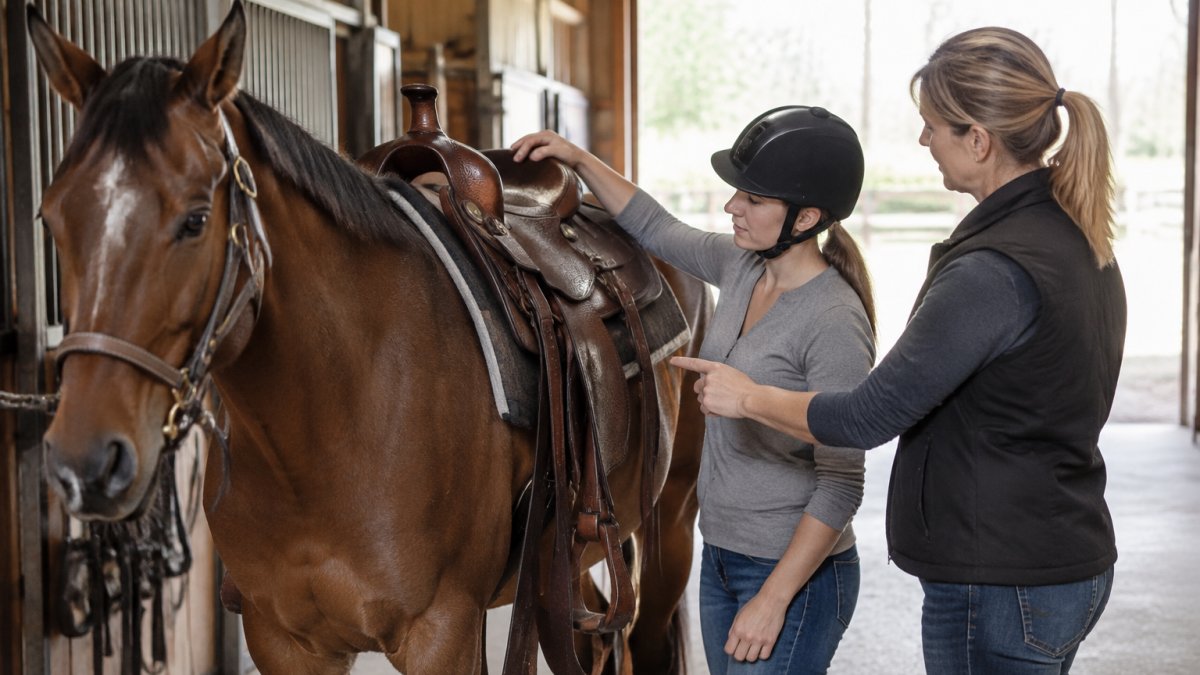
Fit the Horse Before the Rider
A saddle that pinches the horse's shoulders will make a good horse sour and a beginner nervous. If you are unsure, our guide on how to choose horse saddle fit walks through the checks step by step before you buy.
Fit matters more than material. A well-fitted synthetic saddle is safer and kinder to the horse than a poorly fitted leather saddle, and the reverse is also true. Beginners should treat material as a secondary decision behind tree width, panel contact, and rider seat size.
Signs of Poor Fit to Watch For
Horses often show fit problems through behavior. Watch for:
- Flinching, tail swishing, or pinning ears when the saddle is placed
- White hairs or dry spots under the saddle after a ride
- Soreness or heat along the shoulders or loin
- A saddle that rocks, bridges, or lifts at the back
- Girthiness or reluctance to move forward under saddle
If you see any of these, stop and get the fit checked before riding again. A saddle fitter or an experienced instructor can assess tree width, panel contact, and clearance far better than an online size chart.
Match the Saddle to the Riding Discipline
Western riding, English riding, jumping, and trail work each call for a different saddle shape. A barrel saddle is not a dressage saddle, and a trail saddle is not built for the arena. If you are still comparing beginner options, our equine saddles for sale buyer's guide lays out picks by discipline so you can compare before committing.
Safety Inspection Checklist for Beginners
Before you buy any saddle, new or used, inspect it the way a beginner should:
- Stitching: Look for loose, frayed, or missing stitches along the skirt, seat, and billets.
- Billets and girth straps: Check for cracks, stretching, or worn holes. Leather billets that crack are a safety risk; synthetic straps that fray should be replaced.
- Tree integrity: Press along the pommel and cantle and listen for creaks or cracks. A broken tree makes a saddle unsafe regardless of material.
- Hardware: Confirm rings, D-rings, and buckles are tight and free of rust or sharp edges.
- Panels and flocking: Feel for lumps, hard spots, or uneven filling that would press on the horse's back.
Watch out: a used leather saddle can look sound and still have a cracked tree or stretched billets. Have a saddler or experienced fitter inspect it before you ride.
Warranty and Return Terms
Ask about warranty and return terms before you pay. Ask about warranty and return terms before you pay, including whether the warranty covers the tree separately from the covering. For a beginner, a trial period on your own horse can be worth more than a slightly lower price.
Synthetic Saddle Care: Cleaning, Weather, and Lifespan
Synthetic saddle care is simple: wipe the surface with mild soap and water after each ride, rinse off mud, and let it dry away from direct heat.
The trade-off is lifespan. Synthetic saddles wear through at stress points and are usually replaced rather than repaired. Stitching and hardware can be fixed, but torn synthetic panels rarely are. For a full routine, see our guide on how to maintain horse saddles.
Leather Saddle Care: Conditioning, Storage, and Repairs
Leather saddle care takes more work but pays you back in years of service. Wipe off sweat and dirt after every ride, condition the leather a few times a year, and store the saddle on a rack in a dry, ventilated space.
Leather is generally repairable by a saddler, and re-flocking can help adjust fit as your horse's back changes. If you are weighing leather, read why leather tack needs conditioning and when so you know what you are signing up for.
Beginner Saddles at Air Capital Tack in Derby, KS
We stock beginner saddles that fit real horses and real budgets. For young riders, the King Series Classic Pony Saddle 12" comes with a headstall, reins, girth, and saddle blanket, so a parent can gear up in one purchase. The Royal King Youth Garrison Barrel Saddle is an attractive, lightweight kids' saddle great for competition and everyday riding.

Adults moving into Western riding can consider the Royal King Ridgeline Saddle 15", an everyday saddle with a smooth, padded leather seat and a close contact skirt. English riders can look at the Henri de Rivel Pro Buffalo Leather Dressage Saddle, which uses an injected molded polymer tree and gusseted flocked panels that can be re-flocked. Our equestrian gear for beginner riders guide covers the basics.


Book a Saddle Fitting Before You Buy
The right saddle is the one that fits your horse and your riding plans, and that is hard to judge online. Visit our Derby store, or shop our online store, to compare synthetic and leather options.
Browse Air Capital Tack's saddle selection online or visit our Derby store to get started.
Choosing between synthetic and leather is easier once you stop guessing about fit.
Frequently Asked Questions
Are synthetic saddles worth it for beginners?
For many beginners, yes. Synthetic saddles usually cost less up front, weigh less, and need only soap and water to clean, which suits riders still learning saddle care. The trade-off is that synthetic materials generally show wear faster and are harder to repair than leather. If you ride a few times a week and want a low-maintenance starter saddle, synthetic makes sense. If you plan to ride for years and want resale value, leather often pays off.
What are the disadvantages of synthetic saddles?
Synthetic saddles can crack, fade, or peel after repeated sun and sweat exposure, and damaged panels or trees are rarely repairable the way leather is. They also tend to have less grip and a different feel under the leg, which some riders notice in the first few months. Resale value is typically lower than leather. None of these make synthetic a bad choice, but they are why many riders move to leather once they commit to regular riding.
Is leather or synthetic easier to clean?
Synthetic is easier. Most synthetic saddles wipe clean with mild soap and water, and you can rinse off mud or sweat without worrying about drying out the material. Leather needs brushing after every ride, periodic conditioning, and protection from rain and direct sun. Leather saddle care takes more time but rewards you with a saddle that molds to your horse and can be repaired. Beginners with limited barn time often start synthetic, then switch.
How do I choose a horse saddle that fits both my horse and me?
Start with the horse. Check that the tree width and panel contact clear the withers and shoulders without pinching, and confirm the saddle sits level. Then check the rider: seat size should let you fit a hand behind your seat, and your knee should sit comfortably behind the flap. Have the horse's fit checked by a qualified saddle fitter. A saddle that fits the horse but not the rider causes poor posture, and vice versa.
Can beginners use a Western saddle for everyday riding?
Yes. Western saddles offer a deep seat and a horn, which many beginners find reassuring on trails and in lessons. They are heavier than English saddles, so consider how often you will lift it onto the horse. At Air Capital Tack, the Royal King Ridgeline 15" at $769.99 is a leather everyday Western option, while the King Series Youth All Around Trail Saddle 11" at $439.97 suits younger riders.


