


Last Updated: October 23, 2026
Quick Summary
To choose saddle fit, trace your horse's withers with a flexible curve, then check wither clearance of two to three fingers and a gullet channel with daylight front to back. Confirm even panel contact and no rocking, then repeat the key checks under saddle.
- Gather a flexible saddle fitting curve about 17 inches long, cardboard, and a marker before you start.
- Trace both sides of the withers, since horses are rarely perfectly symmetrical.
- Never fix a narrow gullet with a thicker pad, which makes the pinch worse.
- Dry spots under the panels after a ride show exactly where pressure built up.
- Call a professional fitter for repeated pressure points or a horse that changed shape.
Table of Contents
- Step 1: Gather the Tools for Saddle Fit Assessment
- How to Measure a Horse for a Saddle
- Step 2: Check Wither Clearance and Gullet Width
- Signs of Poor Saddle Fit You Should Never Ignore
- Your Saddle Fit Checklist: Static and Ridden Checks
- When to Call a Professional Saddle Fitter
- Step 3: Fine-Tune Fit With Pads and Shims
- Frequently Asked Questions
Step 1: Gather the Tools for Saddle Fit Assessment
Learning how to choose a horse saddle fit starts with three simple tools, and you probably already own one of them. At Air Capital Tack, we tell every rider the same thing: guesswork costs horses their comfort. A saddle that pinches or rocks will change how your horse moves within weeks.
Here is what you need before you start:
- A flexible saddle fitting curve, about 17 inches long—available for purchase at AirCapitalTack.com
- Cardboard and a marker for tracing
- A clean, flat work area with good light
A saddle fitting curve is a flexible strip that molds over your horse's withers so you can copy the shape onto cardboard. That pattern travels with you to the tack shop.

We stock a Saddle Fitting Curve that does exactly this job. It is simple, reusable, and takes the mystery out of wither tracing.
How to Measure a Horse for a Saddle
Measuring a horse for a saddle means capturing the wither shape, the gullet width, and the angle of the shoulder. Get those three right and most fitting problems disappear before you ever set a saddle on your horse's back.
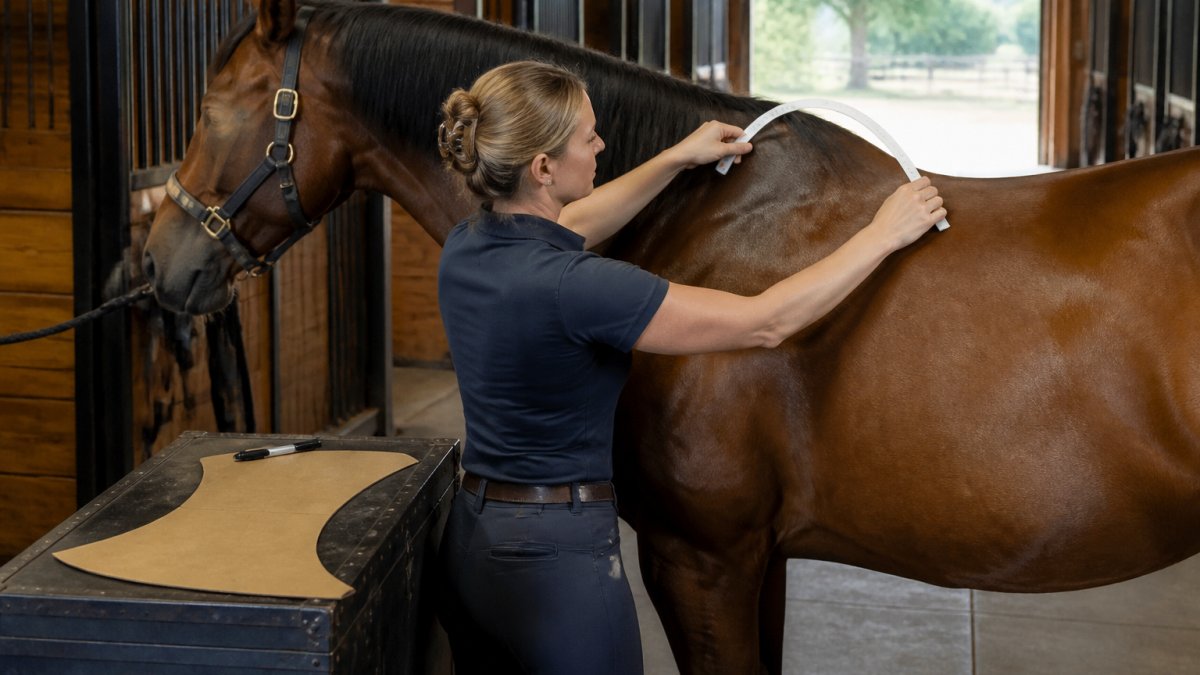
Follow this order:
- Stand your horse square on level ground.
- Find the back edge of the shoulder blade.
- Mold the curve over the withers, just behind that edge.
- Hold it steady until the shape sets.
- Trace the inside curve onto cardboard and cut it out.
Label the pattern with your horse's name and the date. Horses change shape with season and fitness, so an old tracing can mislead you.
Step 2: Check Wither Clearance and Gullet Width
Wither clearance is the gap between the top of your horse's withers and the underside of the saddle's gullet. You want two to three fingers of space with the saddle in place and the girth snug. Any less, and the saddle presses on bone.
Gullet width matters just as much. Set the saddle on your horse without a pad and look down the channel from front to back. You should see daylight the whole way through. If the panels touch the spine, the tree is too narrow.
Check these three points:
- Front: clear of the withers, no contact
- Middle: channel open along the spine
- Back: panels rest flat, no rocking
Rocking is the sneaky one. A saddle that rocks front to back feels fine standing still, then shifts under a rider. Run your hand under the panels while your horse stands relaxed. Uneven pressure shows up fast.
Signs of Poor Saddle Fit You Should Never Ignore
Sore backs, white hairs, and a horse that flinches when you tack up are the classic signs of poor saddle fit. Dry spots under the panels after a ride tell you exactly where pressure built up. Sweat marks should be even across the back, with no hard dry patches.
Watch for these:
- Hollowing or dipping away when you place the saddle
- Head tossing or tail swishing under saddle
- Resistance to going forward or refusing to bend
- Sores, rubs, or white hair patches at the withers
- A rider who keeps sliding to one side
Behavior changes count as symptoms too. A horse that was willing last month and is girthy now is telling you something. Check the fit before you check the attitude.
Your Saddle Fit Checklist: Static and Ridden Checks
A saddle fit checklist separates a quick look from a real evaluation. Do the static checks in the barn, then repeat the key ones under saddle. Both matter, because some problems only show up in motion.
Check |
When |
What Good Looks Like |
|---|---|---|
Wither clearance |
Static |
Two to three fingers of space |
Gullet channel |
Static |
Daylight visible front to back |
Panel contact |
Static |
Even pressure, no rocking |
Shoulder freedom |
Ridden |
Full stride, no short steps |
Saddle stability |
Ridden |
No side-to-side slip |
Sweat pattern |
After ride |
Even marks, no dry spots |
Run through the static list first. Then ride a short session and repeat the ridden checks. Compare notes after each ride for a week.
When to Call a Professional Saddle Fitter
Call a professional saddle fitter when your checks show repeated pressure points, when your horse's behavior changes under saddle, or when you are buying a saddle in a new size or style. A fitter brings gauges, flocking tools, and years of eyes-on experience that no checklist replaces.
Bring your wither tracing and your cardboard pattern to the appointment. Fitters work faster with real data in hand.
Signs it is time to book one:
- Dry spots that keep appearing in the same place
- A horse that has changed shape significantly
- A new saddle purchase in a discipline you have not ridden
- Persistent resistance you cannot trace to anything else
If you are near Derby, stop by our store and we will walk you through your tracing and help you spot problems before they become vet bills.
Step 3: Fine-Tune Fit With Pads and Shims
Pads and shims adjust small gaps, not major fit problems. Use a shim to fill space behind the shoulder or under the front of the saddle. Place shims just under the front of the saddle and on top of the pad as needed.
Our Saddle Shims are tapered closed-cell foam wedges built for exactly this job. They support the front of the saddle and help level out a slight tilt.

For everyday padding, a contoured felt pad keeps the saddle steady. The Tough1 Contour Felt Saddle Pad has a wither relief opening and a moisture-wicking 3/4-inch felt base that holds the saddle in place.

Tough1 Contour Felt Saddle Pad 31"x31" — Available at AirCapitalTack.com
Getting saddle fit right takes patience, but the payoff shows up in every ride. A horse that moves freely and stands quietly for tacking is telling you the fit works. If you are still chasing pressure points or a horse that flinches at the girth, our team at Air Capital Tack can help. We offer expert-curated saddles, pads, and fitting tools, ship nationwide six days a week, and welcome you at our Derby, KS storefront. Start with a proper tracing, and let us help you find the fit your horse deserves.
Frequently Asked Questions
How do you know if a saddle fits a horse correctly?
A correctly fitting saddle clears the withers by about two to three fingers, sits level front to back, and contacts the back evenly without bridging or rocking. With a rider mounted, you should see no pinching at the shoulders and feel even pressure under the panels. Run through a saddle fit checklist both before and after riding: check sweat patterns, watch for white hairs or sore spots, and confirm the horse moves freely without hollowing or tail swishing.
How often should you reassess your horse's saddle fit?
Reassess saddle fit at least twice a year, and any time your horse's workload, weight, or muscling changes. Young horses, seniors, and horses coming back from time off shift shape fastest and may need checks every three to four months. Also recheck after a saddle is reflocked or repaired, and whenever you notice signs of poor saddle fit such as new white hairs, girthiness, or reluctance to move forward under saddle.
Can one saddle fit different horses?
Sometimes, but only horses with very similar wither shape, back width, and panel contact. A saddle that fits one horse well will often bridge or rock on another with a different topline, even if they are the same height. If you regularly ride multiple horses, use a saddle fit checklist on each one and plan on shims or a separate saddle for horses that fall outside the fit range.
How can you tell if a saddle is too wide or too narrow?
A too-narrow saddle sits high on the withers, pinches the shoulders, and often leaves dry spots on the sweat pattern. A too-wide saddle drops down and rocks, concentrating pressure along the spine and loins. Check wither clearance with your fingers and look for uneven sweat marks after a ride. A flexible saddle fitting curve helps you compare gullet angle to your horse's actual wither profile before you buy.


