


Table of Contents
- Why Itchy Horses Scratch: What Pruritus Really Means
- Common Horse Itching Causes, From Parasites to Allergies
- Sweet Itch in Horses: Recognizing Insect-Bite Hypersensitivity
- Reading the Signs: Body Areas, Lesions, and Triage Levels
- How Veterinarians Diagnose Itchy Skin in Horses
- Horse Skin Irritation Treatment: What Works and What to Skip
- Choosing a Horse Anti-Itch Spray and Prevention Plan
- Conclusion
- Frequently Asked Questions
Last Updated: October 9, 2026
Why Itchy Horses Scratch: What Pruritus Really Means
Pruritus is the medical term for the itch sensation that drives horses to rub, bite, and scratch their skin. It is a symptom, not a diagnosis.
Owners often ask for a fast answer for a scratching horse. The honest answer: itchy horses can react to dozens of triggers, and treatment only works when you find the right one.
Most guides jump straight to a spray or shampoo. Those treat the surface; if you never identify the cause, the itching returns.
Common Horse Itching Causes, From Parasites to Allergies
Horse itching causes fall into two groups: external irritants and internal allergic responses. Most cases trace back to one of these:
- Parasites like mites, lice, and bots
- Insect bites from midges, flies, and mosquitoes
- Allergic reactions to insect saliva, pollen, or feed
- Bacterial infections that move in after scratching breaks the skin
- Fungal infections such as rain rot and ringworm
- Contact irritants from bedding, blankets, or grooming products
Many horses deal with more than one at once: a horse with an insect allergy scratches, breaks the skin, and picks up a bacterial infection, three problems, not one.
Parasites and Insect Bites: Mites, Lice, Flies, and Midges
Mites and lice live on the horse and cause constant, intense itching. Mites are microscopic and often missed; lice are visible if you part the hair. Biting insects are a bigger problem for most owners, biting midges (no-see-ums) are the main trigger for sweet itch, with black flies, mosquitoes, and stable flies adding to the load.
Insect control is the first line of defense. That means:
- Fly sprays applied consistently, not just on bad days
- Fly masks and sheets during peak season
- Manure management to cut stable fly breeding
Allergic Reactions, Pollens, and Feed Triggers
An allergic reaction happens when the immune system overreacts to something harmless, often insect saliva, but also pollens, weeds, grasses, or molds. Feed triggers are less common but real; if itching started after a feed change, investigate with your vet. Seasonal patterns tell you a lot: spring-to-fall itching points to environmental allergens, while year-round itching points toward parasites, feed, or a skin infection.
Sweet Itch in Horses: Recognizing Insect-Bite Hypersensitivity
The telltale sign is intense itching along the mane, tail head, and midline. Horses rub these areas raw against fences, gates, and stalls.
This is not a condition you cure. You manage it. Owners who accept that early do better than owners who chase a miracle fix.
Management comes down to three things:
- Reduce exposure: stabling at peak midge hours, usually dawn and dusk
- Block the bite: a well-fitted sweet itch rug covers the mane, tail, and belly
- Calm the skin: soothing sprays and shampoos to break the itch-scratch cycle
Start before the season peaks; once a horse is rubbed raw, you are playing catch-up for weeks.
Reading the Signs: Body Areas, Lesions, and Triage Levels
Where a horse itches points to the cause, making a body map one of your most useful tools.
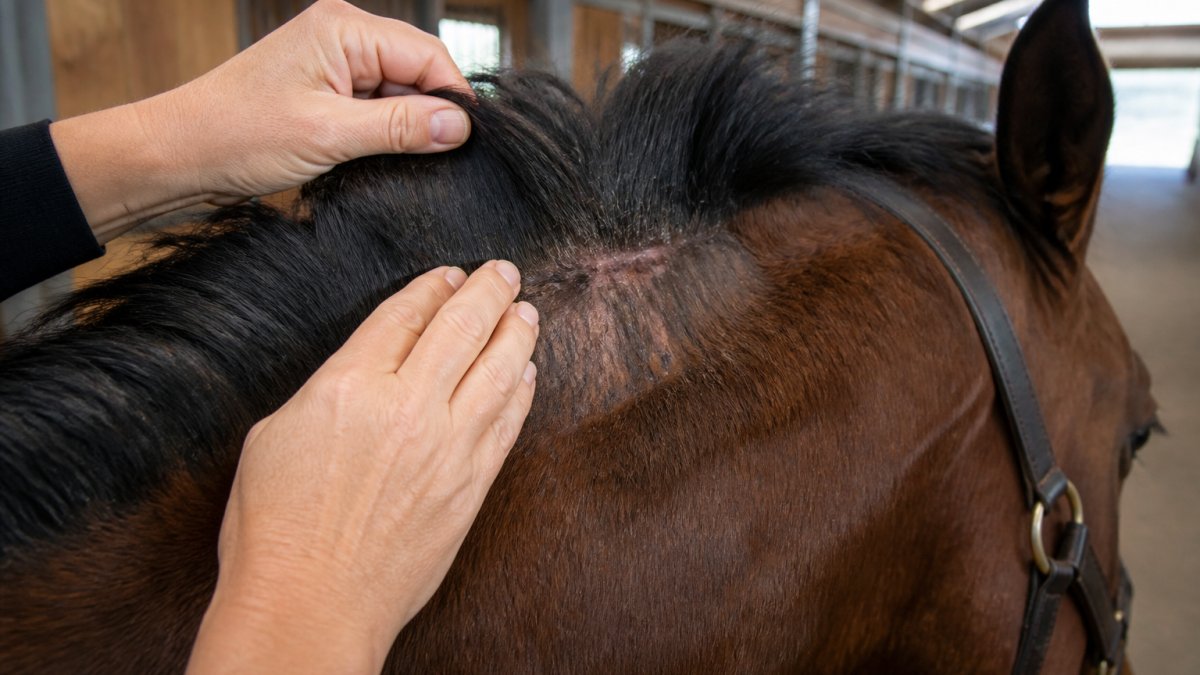
Use this guide to narrow things down:
| Area Affected | Likely Cause | First Step |
|---|---|---|
| Mane, tail, midline | Insect-bite hypersensitivity | Sweet itch rug, insect control |
| Base of tail only | Pinworms or tail rubbing | Fecal check, deworming plan |
| Neck, shoulders, sides | Lice or mites | Vet exam, topical treatment |
| Face, ears, muzzle | Flies, photosensitivity | Fly mask, shade, vet call |
| Widespread, year-round | Feed or environmental allergy | Vet workup, diet trial |
Now for triage. Not every itchy horse needs an emergency call, but some do.
- Urgent: rapid hair loss, open sores, swelling, or a horse that will not stop rubbing
- Soon: itching that has lasted more than a week or is spreading
- Routine: mild, seasonal itching that responds to basic management
How Veterinarians Diagnose Itchy Skin in Horses
A veterinary exam is the fastest route to a real answer, but rarely a single visit. Knowing what happens at each stage helps you prepare and ask better questions.
Step 1: History and Signalment
Your vet will start with a full history: when the itching began, whether it is seasonal or year-round, what changed in feed, bedding, turnout, or herdmates, and what you have already tried. Age, breed, and use matter too, a young horse with sudden tail rubbing points in a different direction than a middle-aged horse with a years-long summer pattern. Bring a written timeline of feed changes, turnout, bedding, and when the itching started; that history often shortens diagnosis considerably.
Step 2: Physical and Skin Examination
Your vet will examine the coat and skin under good light, parting hair along the mane, tail head, midline, face, and legs, looking for the pattern of lesions. Thickened, wrinkled skin along the mane and tail head suggests chronic insect-bite hypersensitivity; scaly, crusty patches on the back and rump suggest rain rot; circular, expanding rings with broken hairs suggest ringworm; patchy hair loss with intense itch on the neck and shoulders suggests lice or mites.
Step 3: Parasite Checks
- Skin scrapings: A small area is scraped with a scalpel blade until capillary blood appears, then examined under a microscope. This is how mites are confirmed, since they are too small to see with the naked eye.
- Tape preparations: Clear tape pressed against affected skin picks up lice eggs, nits, and surface debris for microscopic review.
- Fecal egg count: A fresh manure sample is examined for parasite eggs. This is most useful when tail rubbing raises the question of pinworms, though pinworm eggs are notoriously hard to find on a standard float.
Step 4: Infection and Allergy Testing
- Skin cytology: A slide pressed against a lesion or a swab of exudate is stained and examined for bacteria and yeast. This tells your vet whether a secondary infection is present and whether it needs systemic or topical treatment.
- Fungal culture: Hair and scale samples are cultured when ringworm is suspected, since not every circular lesion is fungal.
- Allergy testing: Intradermal skin testing or serum testing may be recommended once parasites, infection, and contact irritants are ruled out. These tests are most useful for environmental allergens and insect-bite hypersensitivity, and results guide immunotherapy rather than providing an instant fix.
What to Expect From the Process
Diagnosis is not always quick. Allergy cases can take multiple visits across seasons, since a December exam cannot reveal a spring flare. The common pattern: rule out easy, treatable causes first (parasites, infection, contact irritants), then investigate allergy only if itching persists.
UltraCruz - Equine Oatmeal Shampoo for Horses (16oz) →
When to Skip Straight to a Vet
Some signs should not wait for a home experiment. Call your vet promptly for rapidly spreading hair loss, open sores, swelling, a horse that will not stop rubbing despite basic management, or any sign of systemic illness such as fever or lethargy, these point to infection or a more serious condition that home care will not resolve.
Horse Skin Irritation Treatment: What Works and What to Skip
Horse skin irritation treatment works best when it matches the cause. A single product rarely fixes a multi-cause problem, and the timeline depends on what you are treating.
Treatment by Cause
Parasites (mites, lice): Usually a veterinary-prescribed topical or systemic antiparasitic.
Insect-bite hypersensitivity (sweet itch): No cure; management is lifelong and seasonal.
Bacterial infection (pyoderma): Prescription antibiotics or medicated shampoos are usually needed.
Fungal infection (rain rot, ringworm): Antifungal shampoos or topical treatments, sometimes with systemic medication for severe cases.
Allergic dermatitis (environmental or feed): The most frustrating category. Relief depends on identifying and removing the trigger, which can take months.
What Works
- Prescription treatment for infections, from your vet
- Insect control for bite-related itching, applied consistently rather than only on bad days
- Soothing shampoos and sprays to calm inflamed skin and remove allergens
What to Skip
- Bleach, kerosene, and other harsh home remedies that damage skin and delay healing
- Human itch creams not cleared for equine use
- Repeated use of the same product after it stops working
Realistic Timelines
A common mistake is expecting overnight results. Parasite and infection treatments often improve within days but need follow-up to prevent recurrence. Insect-bite management improves within days of bite reduction, but skin healing takes weeks.
For sensitive, dry, or itchy skin, we recommend the UltraCruz Equine Oatmeal Shampoo for Horses. Pair it with the UltraCruz Equine Misting Conditioner to moisturize dry skin and detangle hair.


Choosing a Horse Anti-Itch Spray and Prevention Plan
A horse anti-itch spray is your daily tool, not your whole strategy. The best plan combines prevention, protection, and skin care.
For insect-heavy environments, we like the Pyranha Nulli-Fly Spray. Its water-based, citronella-scented formula offers long-lasting protection and will not attract dust and grime the way oil-based products do.
For an all-natural option, the Equiderma Neem Horse Spray uses neem leaf and oil, aloe gel, citronella, eucalyptus, tea tree, lemongrass, lemon peel, and lavender.

Build your plan around the season:
- Early spring: start insect control before the first flare
- Peak summer: daily spray, rugs, and shade during peak biting hours
- Fall: continue until the first hard frost
Conclusion
Managing a scratching horse takes patience, a good vet relationship, and the right gear. The cause is rarely obvious and the fix is rarely a single product, but a clear plan built around identification and consistency gets most horses comfortable.
Air Capital Tack has over 42 years of experience in the equine industry, and we stock grooming and insect control products. Our team can help you build a plan that fits your horse, your barn, and your season.
Frequently Asked Questions
How can I relieve my horse's itching?
Start by removing the trigger. If insects are the cause, use fly control, fly sheets, and a horse anti-itch spray such as Pyranha Nulli-Fly, which offers long-lasting protection. For dry or allergy-prone skin, bathe with a soothing oatmeal shampoo like UltraCruz Equine Oatmeal Shampoo, then follow with a leave-in misting conditioner. Keep the horse out of the worst insect hours (dawn and dusk) and stop the scratching cycle early, because broken skin invites bacterial infection that needs veterinary care.
What are the most common causes of itching in horses?
The main horse itching causes are parasites and insect bites (mites, lice, biting midges, black flies, mosquitoes, stable flies), allergic reactions to pollens, weeds, grasses, molds, feeds, or medications, and secondary bacterial or fungal skin infections. Insect-bite hypersensitivity, often called sweet itch, is one of the most common seasonal triggers. Because several causes look alike, a veterinary examination is the fastest way to identify the real culprit before you spend money on the wrong treatment.
How can I tell if my horse has sweet itch?
Sweet itch in horses usually follows a seasonal pattern, flaring when biting midges (Culicoides) are active. Look for intense rubbing of the mane, tail base, withers, and rump, leading to hair loss, broken skin, and thickened, wrinkled skin in severe cases. The itching is often severe and persistent rather than occasional. If your horse rubs those areas every summer and improves when insects disappear, insect-bite hypersensitivity is likely, and your veterinarian can confirm it.
When should I call a veterinarian about my horse's itchy skin?
Call a veterinarian if itching is persistent, the horse is losing weight or sleep, or you see open sores, crusting, discharge, swelling, or foul odor, which suggest bacterial or fungal infection. Also call if the horse rubs until it bleeds, if symptoms appear year-round, or if a horse anti-itch spray and basic grooming bring no improvement within a week or two. Early veterinary examination shortens treatment time and prevents skin lesions from becoming chronic.


