


Last Updated: November 2, 2026
Quick Summary
Rubber and synthetic bits, plus bitless setups like hackamores, side pulls, and bosals, are the main alternatives to traditional metal bits for sensitive mouths. Rubber is the softest first step, synthetic sits between rubber and metal, and bitless designs move contact to the nose, chin, and poll. Rule out dental pain and bit fit before switching.
- Rubber mouthpieces are softer than metal but can be chewed, so inspect and replace them at the first sign of wear.
- A Tough1 neoprene bit guard cushions the mouth corners and prevents pinching without changing the mouthpiece.
- Synthetic bits suit horses that need a gentler surface but still need clear, consistent signals.
- Start with a veterinary dental exam, since ulcers, sharp points, and wolf teeth cause the same evasions a bad bit does.
- Do not move a horse straight from a metal bit into a use hackamore, as pressure shifts to a smaller nose area.
Table of Contents
- Why Metal Bits Can Be a Problem for Sensitive Mouths
- Signs of Bit Discomfort in Horses
- Rubber Horse Bits for Sensitive Mouths
- Synthetic Horse Bits: What They Are and Who They Suit
- Bitless Alternatives: Hackamores, Side Pulls, and Bosals
- How to Choose a Bit for a Sensitive Horse
- Try a Softer Setup: Test a Bitless Option This Week
- Frequently Asked Questions
Why Metal Bits Can Be a Problem for Sensitive Mouths
Metal bits work well for many horses, but they are not a neutral piece of equipment. A metal mouthpiece sits directly on the tongue, bars, and lips, and every rein aid transfers pressure through that contact point. For horses with thin-skinned mouths, a shallow palate, a large tongue, or a history of rough handling, that pressure shows up fast as tension, head tossing, or a braced jaw.
When a horse fights the bit, the bit is often the first thing to question. This guide covers the alternatives to traditional metal horse bits for sensitive mouths, from padded mouthpieces to bitless setups, and explains who each option actually suits.
The core problem is not that metal is cruel. It is that metal is unforgiving. It does not flex, it does not absorb a clumsy hand, and it transmits every ounce of rein pressure straight to the same few square inches of tissue. Rubber, synthetic materials, and bitless designs each change that equation in a different way.
Watch out: buying a softer bit is not a fix if the underlying issue is bit fit, tooth pain, or a heavy rein hand. Rule those out first.
Signs of Bit Discomfort in Horses
Signs of bit discomfort in horses are usually behavioral before they are physical, which is why so many owners miss them. The horse that opens its mouth wide when you bridle, chomps at the bit, or tosses its head on the first trot is telling you something.
Common signals to watch for:
- Evading contact by going behind the bit or above it
- Head tossing, especially during transitions
- Tongue over the bit or a busy, chomping mouth
- Reluctance to accept the bridle or hold it clenched
- Sores, scabs, or white hair at the mouth corners
- Bracing on one rein more than the other
A common mistake is reading these only as training problems. But if a horse is quiet in a halter and agitated in a bridle, the mouthpiece deserves a hard look before you add more training pressure.
Rubber Horse Bits for Sensitive Mouths
Rubber horse bits for sensitive mouths are the simplest first step, and often the most effective one. A rubber mouthpiece is generally softer against the bars and tongue than metal.
The trade-off is durability. Rubber can be chewed, and a chewed bit develops rough edges that defeat the purpose. Inspect the mouthpiece regularly and replace it at the first sign of wear.
If your horse is fine in metal except for chafing at the corners, you may not need a new bit at all. A Tough1 neoprene bit guard cushions the corners of the mouth and helps prevent pinching without changing the mouthpiece.
Synthetic Horse Bits: What They Are and Who They Suit
Synthetic horse bits are mouthpieces made from materials other than metal, typically polymer compounds molded into a solid or jointed shape. They sit between rubber and metal on the firmness scale: softer than steel, more durable than rubber, and available in more shapes.
Who do they suit? Horses that need a gentler surface but still need clear, consistent signals. A synthetic bit keeps the feel of a conventional bitted ride while removing the hardest contact surface. That makes it a practical middle ground for a horse that is not ready for bitless work but is unhappy in metal.
Bitless Alternatives: Hackamores, Side Pulls, and Bosals
Bitless alternatives remove the mouthpiece and move communication to the nose, chin, and poll.
Tough1 Miniature S Hack with Rope Nose →
There are three families worth knowing, and they are not interchangeable.
Hackamores apply pressure on the nose and chin. The Jacks chrome plated braided leather hackamore bit uses chrome plated 9-inch cheeks and a braided leather nose band, and it works well on horses that do not respond to a standard bit. The Tough1 Miniature S Hack with Rope Nose pairs a rope nose with a removable curb chain for nose pressure, and it is popular for slow training work and for horses that do not do well with traditional mouthpiece bits.

Side pulls apply direct, non-use pressure to the sides of the nose. The Tough1 Harness Leather Rolled Side Pull is built from oiled harness leather with a rolled noseband and solid brass hardware, and it makes a useful training aid when starting horses.

Bosals are the traditional western hackamore setup. The Bosal with One Ear Headstall provides natural pressure across the nose and is designed for training, groundwork, or everyday riding.

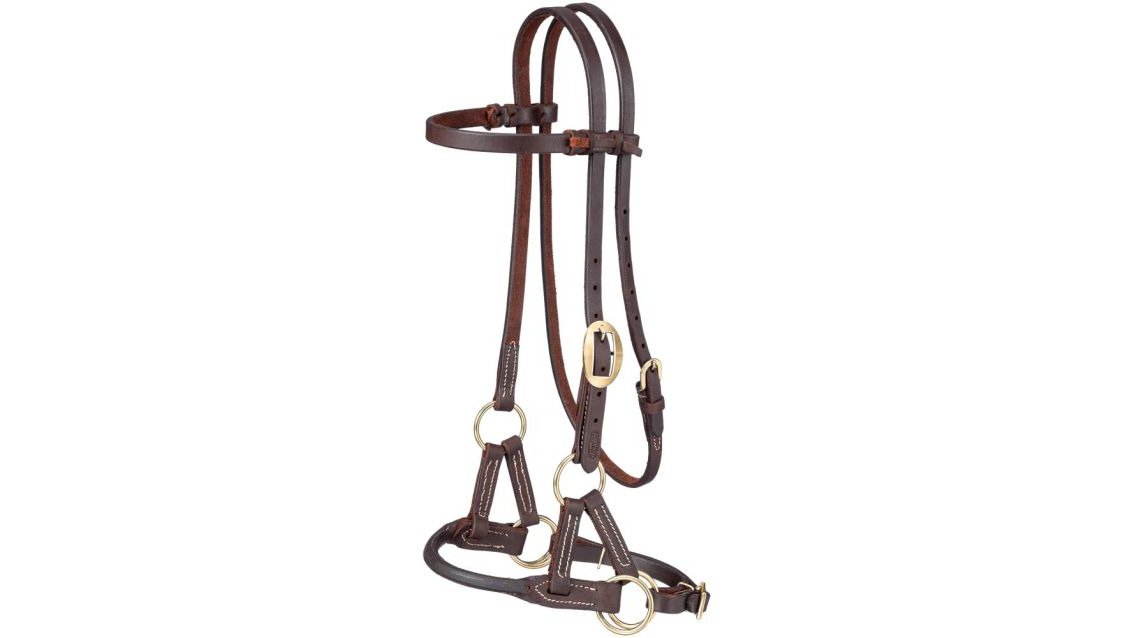
Here is how the options compare on the factors that decide the choice:
| Option | Contact Point | Best For | Watch Out For |
|---|---|---|---|
| Rubber bit | Mouthpiece and bars | First step off metal | Wears out, thicker in the mouth |
| Synthetic bit | Mouthpiece and bars | Horses needing clear signals | Not a fix for heavy hands |
| Hackamore | Nose and chin, with use | Horses that ignore a bit | Too much use in soft hands |
| Side pull | Sides of the nose, no use | Starting horses, direct riders | Less refinement at speed |
| Bosal | Nose, traditional balance | Western training and groundwork | Requires a trained hand |
How to Choose a Bit for a Sensitive Horse
How to choose a bit for a sensitive horse comes down to four checks, in this order: rule out pain, match the mouthpiece to the mouth, match the severity to the hands, and test before you commit.
Start with a veterinary dental exam. Ulcers, sharp points, and wolf teeth cause the same evasions a bad bit does, and no mouthpiece fixes a tooth. Once the mouth is clear, work through the decision:
- Mouth conformation. A thick tongue or shallow palate needs a thinner mouthpiece or more room, not a bigger one.
- Your hands. A rider with unsteady hands should avoid use. A side pull forgives more than a hackamore.
- The work. Groundwork and starting horses favor a side pull or bosal. Speed events may call for a hackamore.
- Materials. Leather and synthetic both need inspection. Leather rewards care and lasts when it gets it. If you are weighing materials for daily trail riding, this comparison of leather versus synthetic western bridles for daily trail riding covers the trade-offs in depth.
Watch out: do not move a horse straight from a metal bit into a use hackamore. The pressure moves to a smaller, more sensitive area of the nose, and a horse that was fine in a bit can become head-shy in a week.
Try a Softer Setup: Test a Bitless Option This Week
A short, low-stakes trial is a practical way to learn what your horse prefers. Ride in one bitless option for a week at the walk and trot, and watch the horse closely.
Air Capital Tack, founded in 2021 and locally owned and operated in Derby, KS, is backed by an owner with over 42 years in the equine industry and the owner of the largest World Champion horse riding and equine training facility in the state since 1983. Products are available for nationwide shipping and in-store pickup, and we ship six days a week. We offer thousands of equine and farm products from top brands.
If you are in the Derby area, you can visit our retail location to look at the products in person before you buy.
Frequently Asked Questions
What are the best alternatives to metal bits for horses with sensitive mouths?
The main options are bitless setups like hackamores, side pulls, and bosals, plus rubber or synthetic bits that feel softer than metal. Hackamores use nose pressure instead of mouth pressure, which can help horses that fuss over a mouthpiece. Rubber and synthetic bits reduce the risk of pinching and chafing. The right choice depends on your horse's training level and how they respond to pressure.
Are rubber horse bits softer than metal bits?
Rubber bits are generally softer than metal, which can help some horses. They reduce the chance of chafing at the mouth corners, especially when paired with bit guards. Keep in mind that rubber bits wear faster than metal ones, so check for cracks or rough edges regularly and replace them when needed.
How do I know if my horse is uncomfortable with its bit?
Watch for head tossing, excessive salivation, a hollow frame, grinding teeth, or resistance to the bridle. Some horses open their mouths repeatedly or try to get their tongue over the bit. These are common signs of bit discomfort in horses. If you notice any of them, check the bit fit, try a softer material or bitless option, and consult your veterinarian or equine dental professional if the behavior continues.
Can a bit cause sores or pressure points in a horse's mouth?
Yes. Ill-fitting bits, rough edges, or too much rein pressure can cause sores at the mouth corners or on the bars of the mouth. Using bit guards can help prevent chafing and pinching. Inspect your bit regularly for wear, make sure the width fits your horse's mouth, and give your horse breaks from bitted work. If sores appear, stop using the bit and have a vet examine the mouth.


