


Table of Contents
- What Makes a Horse Tack Brand Worth Buying in 2026
- Quick Comparison: Five Tack Pieces That Cover the Basics
- Best Saddle Brands for Horses: What Separates Good Saddles From Bad
- Horse Tack Brands for Beginners: Start With These Four Pieces
- How to Choose a Horse Saddle That Fits Your Horse and Your Discipline
- Horse Tack Care and Maintenance: Make Your Gear Last
- Where to Buy the Best Horse Tack Brand Near You
- Frequently Asked Questions
Last Updated: October 21, 2026
What Makes a Horse Tack Brand Worth Buying in 2026
Finding the best horse tack brand for 2026 starts with one question: does the gear hold up under daily use and fit the horse in front of you? At Air Capital Tack, we have spent years watching which brands survive real barn conditions and which ones fail. The answer rarely comes down to a logo.
A horse tack brand is a company that manufactures or curates riding equipment, including saddles, bridles, headstalls, breastcollars, and training aids. Good brands share three traits: consistent materials, honest sizing, and parts you can replace. Weak brands cut corners on stitching and hardware, and you feel it within a season.
Here is the part most guides miss. The best brand for your barn depends on your discipline and your horse's build, not on a national ranking. A western rider training a young horse needs different gear than a parent buying a first English bridle.
Below, we break down what separates durable tack from disposable tack, which pieces to buy first, and how to care for leather so it lasts. Every recommendation ties back to how the equipment actually performs.
Quick Comparison: Five Tack Pieces That Cover the Basics
If you want a working tack setup without guessing, these five pieces cover the core needs for most riders. Each one solves a specific problem, and each is available through Air Capital Tack.
| Piece | Price | Best For | Key Feature |
|---|---|---|---|
| Tough1 Nylon Mule Headstall with Cavesson | $17.99 | Ear-shy horses and mules | Clip crown avoids pulling over ears |
| Tough1 Leather Mule Headstall with Cavesson | $73.99 | Mules and ear-sensitive horses | Snap closure at crown and brow |
| Bosal with One Ear Headstall | $124.99 | Bitless training and groundwork | Traditional bosal nosepiece |
| Equitare Synthetic Bridle | $41.99 | Beginners and schooling | Easy-clean synthetic leather |
| Silver Royal Harness Leather Breastcollar | $51.99 | Daily working use | Doubled and stitched harness leather |
The nylon headstall is the budget entry point for a horse that fights traditional headstalls. The leather version adds durability and a more traditional feel. The bosal setup suits riders who prefer bitless communication. The synthetic bridle is the simplest starter option for English riders. The breastcollar rounds out the set for horses working in harness or on long trails.

Best Saddle Brands for Horses: What Separates Good Saddles From Bad
A saddle is the single largest tack purchase most riders make, and the difference between a good one and a bad one shows up in the horse's back. Good saddles distribute weight evenly across the panels and keep the gullet clear of the spine. Poor saddles bridge, rock, or pinch, and the horse tells you within a few rides.
When evaluating best saddle brands for horses, look at four things:
- Tree construction: Wood, fiberglass, or synthetic trees each behave differently under stress.
- Panel fill and shape: Wool flocking can be adjusted; foam cannot.
- Leather quality: Full-grain leather breaks in and molds; corrected-grain leather cracks.
- Fitting options: Brands that offer multiple tree widths fit more horses.
What most buyers overlook is that a premium saddle on the wrong tree is worse than a modest saddle that fits. Fit beats prestige every time.
A common mistake is buying a saddle because a friend rides the same brand. Your horse's withers, shoulder angle, and back length decide what works. Bring a saddle fitter or ask for a trial period before you commit.
Horse Tack Brands for Beginners: Start With These Four Pieces
New riders do not need a full tack room. They need four pieces that work together, fit correctly, and do not cost a fortune to replace as the rider learns.
For horse tack brands for beginners, prioritize adjustability and easy maintenance over show-ring polish. The Equitare Synthetic Bridle at $41.99 is a smart first English bridle because synthetic leather wipes clean and needs no conditioning. Buckles on both sides of the crown, plus throat and nose adjustments, let it fit a growing horse or a lesson string.

The second piece is a comfortable headstall for schooling. The Tough1 Nylon Mule Headstall with Cavesson at $17.99 handles ear-shy animals without a fight, and the price means a beginner can afford a spare.
Third, add a breastcollar if your horse works on hills or trails. The Silver Royal Harness Leather Breastcollar at $51.99 is doubled and stitched for strength, and the tapered cut sits comfortably across the shoulder.
Fourth, budget for a saddle that fits before anything decorative. Beginners often buy matching sets first and a properly fitted saddle last. Reverse that order.
How to Choose a Horse Saddle That Fits Your Horse and Your Discipline
Learning how to choose a horse saddle comes down to matching three things: the horse's back, the rider's seat, and the discipline's demands. A western saddle built for roping has a different tree and seat depth than an English saddle built for flatwork.
Tough1 Nylon Mule Headstall with Cavesson →
Start with the horse. Run your hand under the saddle with a pad in place. You should feel even contact along both sides of the withers with no pressure points. Rock the saddle gently; if it lifts at the back or front, the tree angle is wrong.
Next, match the discipline. Western riders need a deeper seat and horn for use. English riders need a flatter seat and closer contact. Trail riders benefit from a wider panel that spreads weight over long hours.
Then check the rider. Seat size should let you fit a hand's width behind your hip. Too small and you perch; too large and you slide.
Finally, confirm the brand supports what you ride. A brand that only builds one style will not fit every horse in your barn. Ask whether replacement parts, such as billet straps or stirrup leathers, are available.
Horse Tack Care and Maintenance: Make Your Gear Last
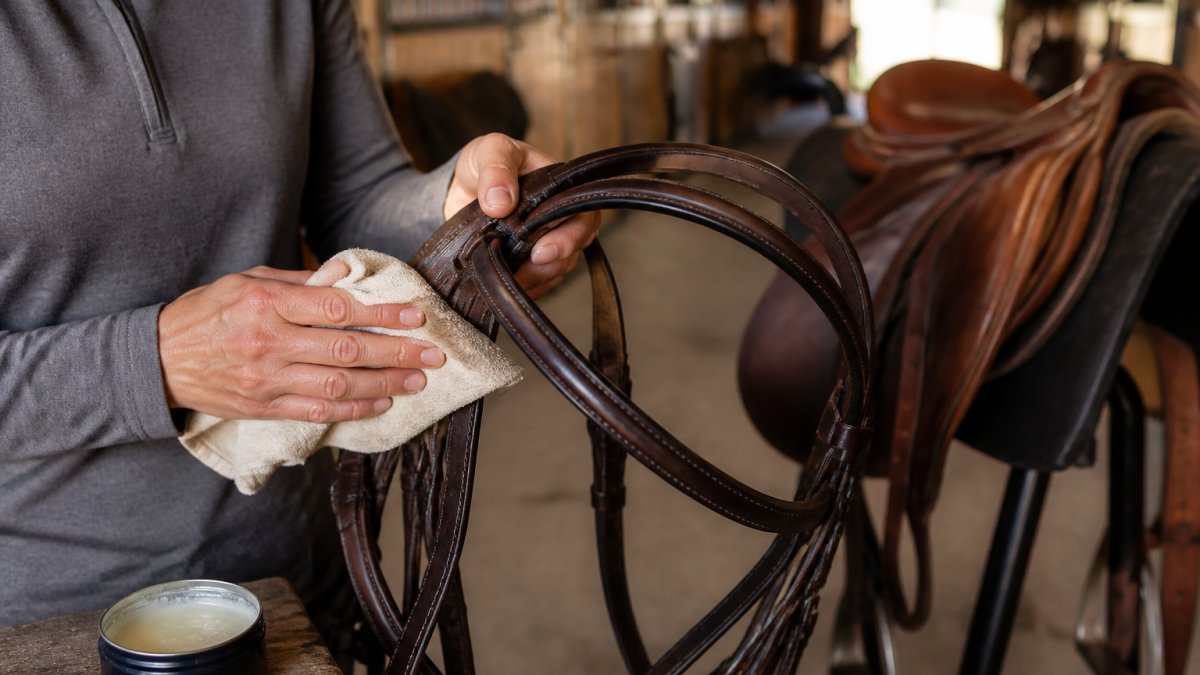
Horse tack care and maintenance is the cheapest way to extend the life of every piece you buy. Leather that gets cleaned and conditioned regularly resists cracking, and hardware that gets checked monthly does not fail mid-ride.
A simple routine works:
- Wipe leather with a damp cloth after every ride to remove sweat and dirt.
- Condition monthly with a leather conditioner, working it in with your fingers.
- Check stitching and rivets every few weeks, especially on breastcollars and headstalls.
- Store tack on a rack in a dry area, away from direct heat.
- Clean synthetic gear with mild soap and water, then air dry.
The Silver Royal Harness Leather Breastcollar is dyed and processed with oils and waxes for weather resistance, which helps in wet conditions. It still needs conditioning to stay supple.

Where to Buy the Best Horse Tack Brand Near You
Buying locally still matters when you need gear that fits and advice you can trust. If you are searching for the best horse tack brand near me in the Derby area, the advantage of a storefront is that you can bring your horse's measurements, compare pieces in person, and ask questions before you spend.
Air Capital Tack opened in Derby, KS in 2021, and our owner brings more than 42 years in the equine industry, including running the largest World Champion horse riding and equine training facility in the state since 1983. That background shapes what we stock and how we help riders choose.
We ship nationwide six days a week, so riders outside Kansas get the same selection. In-store pickup suits anyone who wants to handle the leather before buying.
Choosing tack in 2026 means looking past brand names and asking whether the gear fits your horse and survives your routine. That is the standard we hold at Air Capital Tack, where every piece we stock is chosen with the same question in mind. Browse our saddles, headstalls, and training aids online, or visit us in Derby, KS to see the leather in person. With nationwide shipping six days a week and decades of hands-on equine experience behind our recommendations, we can help you build a setup that works. Get started with Air Capital Tack and gear up with equipment built to last.
Frequently Asked Questions
What is the best horse tack brand for 2026?
There is no single best horse tack brand for every rider. The right choice depends on your discipline, your horse's build, and how often you ride. Look for brands that publish clear materials, offer adjustable fit across multiple points, and hold up to daily use. A $17.99 nylon mule headstall with a clip crown can be the best buy for an ear-shy horse, while a $124.99 bosal and one ear headstall may be the right call for a western trainer. Match the piece to the job first, then compare brands.
Which horse tack brands are best for beginners?
Beginners should prioritize easy maintenance and full adjustability over prestige. Synthetic leather is a practical starting point because it wipes clean and needs no conditioning. The Equitare Synthetic Bridle at $41.99 comes with laced reins and buckles on both sides of the crown, throat, and nose, so it fits a range of horses. Add a breastcollar for security and a simple headstall for groundwork, and you have a usable kit without overspending on gear you will outgrow.
How can I tell if a saddle fits my horse?
Check three things before you ride: clearance at the withers, even pressure along both sides of the spine, and free shoulder movement. With the saddle on a clean back and no pad, you should fit two to three fingers under the pommel and see daylight through the gullet. Saddle pads should sit level, not bridge. Ride for 20 minutes and inspect the back for dry spots or ruffled hair, which signal pressure points. A saddle that fits one horse may not fit another, so try before you buy.
Is expensive horse tack always better?
No. Price tracks material and labor, not fit. A $51.99 harness leather breastcollar that is doubled, stitched, and cut to taper across the shoulder can outperform a more expensive piece that rubs. What matters is whether the tack matches your horse's shape and your discipline. Cheap nylon can be perfectly serviceable for groundwork, and mid-priced leather often lasts years with basic cleaning. Spend where fit and safety matter most, such as the saddle and bridle, and save on training aids.


